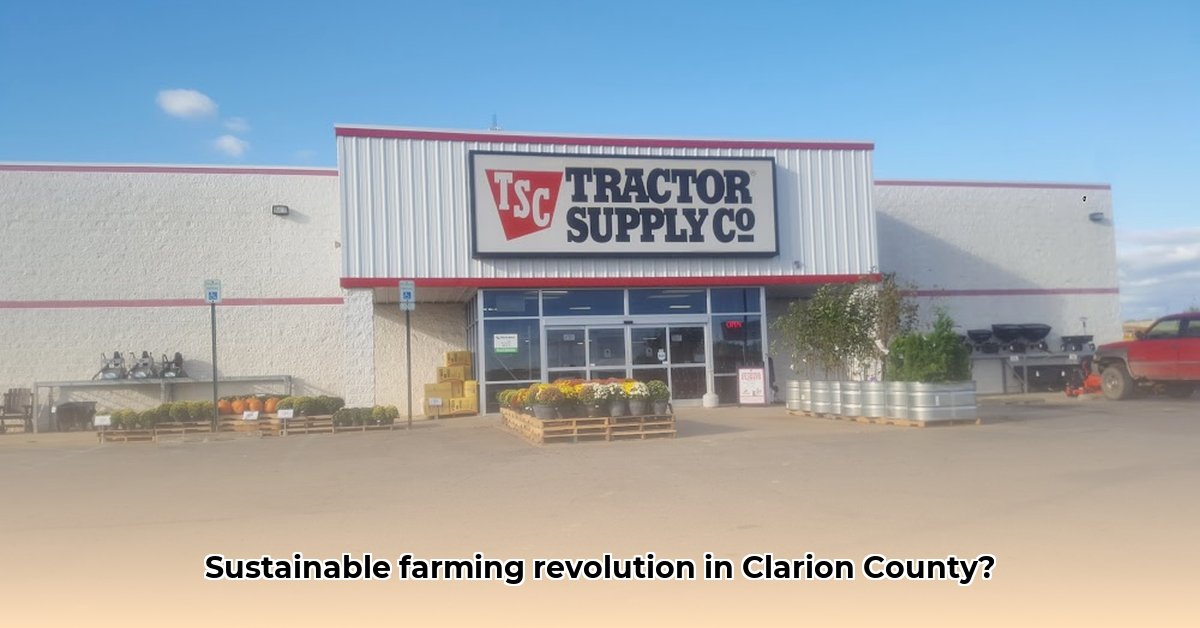
Tractor Supply's Clarion, Pennsylvania location, conveniently situated near major roadways, serves a wide swath of farmers across the region. However, its impact on sustainable agriculture within Clarion County requires further examination. This article analyzes Tractor Supply's current contribution to sustainable farming practices and provides actionable steps for stakeholders to promote environmentally friendly farming methods. For examples of other Tractor Supply locations, see this Michigan Tractor Supply.
Assessing Tractor Supply's Role in Sustainable Agriculture
Tractor Supply's strategic location offers a significant advantage for local farmers, providing convenient access to agricultural supplies. However, a comprehensive assessment requires detailed information on the store's current inventory of sustainable products. Does Tractor Supply offer a sufficient selection of organic seeds, fertilizers, and water-conservation equipment? What about pest control solutions with minimal environmental impact? The availability of these crucial resources significantly impacts the store's contribution to sustainable agriculture in the county. Currently, the extent of this offering remains unclear.
Unlocking the Potential for Sustainable Farming in Clarion County
To fully realize the potential of Tractor Supply Clarion as a driver of sustainable farming, a concerted effort is needed. This effort must involve the store, local farmers, county officials, and environmental organizations.
Three Pivotal Points for Sustainable Growth:
- Increased Availability of Sustainable Products: Expanding the range of eco-friendly options available at Tractor Supply is paramount.
- Collaborative Partnerships: Effective communication and collaboration among all stakeholders are crucial.
- Educational Initiatives: Farmer education and awareness concerning sustainable practices are essential.
Actionable Steps for Sustainable Agriculture in Clarion County
Comprehensive Inventory Assessment (Tractor Supply): Conduct a thorough review of existing inventory, identifying strengths and weaknesses in sustainable product offerings. This assessment should prioritize input from local farmers. Efficacy Metric: Completion within three months, resulting in a prioritized list of products needing expansion.
Stakeholder Collaboration: Facilitate regular meetings involving Tractor Supply representatives, Clarion County farmers, county officials, and environmental NGOs. These meetings should focus on identifying needs, sharing best practices, and developing a shared vision for sustainable agriculture. Efficacy Metric: At least three collaborative meetings held within the first year.
Expansion of Sustainable Product Lines (Tractor Supply): Based on the inventory assessment and stakeholder input, significantly expand the range of sustainable products offered, including organic seeds, fertilizers, water-efficient irrigation systems, and environmentally friendly pest control options. Efficacy Metric: A 25% increase in sustainable product offerings within 18 months.
Educational Resources and Workshops (Tractor Supply & NGOs): Collaboratively develop and deliver workshops and educational materials to farmers on sustainable practices, such as cover cropping, soil health management, and integrated pest management. Efficacy Metric: Attendance exceeding 100 Clarion County farmers across four workshops in the first two years.
A Collaborative Path Forward
The table below outlines the roles and responsibilities of various stakeholders:
| Stakeholder Group | Short-Term Actions | Long-Term Goals |
|---|---|---|
| Tractor Supply Company | Inventory review; community outreach; gather farmer feedback | Develop a comprehensive sustainability program; expand sustainable product lines significantly. |
| Clarion County Farmers | Participate in outreach, provide feedback on needs. | Actively adopt sustainable practices; advocate for supportive policies. |
| Clarion County Officials | Explore funding for sustainable agriculture initiatives. | Integrate sustainable agriculture into county plans; incentivize adoption. |
| Environmental NGOs | Provide training, resources; facilitate collaboration. | Monitor environmental impact; advocate for expanded product lines and policies. |
The Role of Communities in Sustainable Farming
Achieving *pertanian berkelanjutan Clarion* requires active *peran komunitas*. Inspired by successful models like Indonesia's Desa Wisata, Clarion County can leverage community-based initiatives to promote sustainable agricultural practices. These include collaborative waste reduction programs, support for local farmers' markets featuring sustainable products, and community-led education on responsible land management. By fostering a sense of shared responsibility, Clarion can emulate the success of communities worldwide in cultivating a more resilient and environmentally friendly agricultural landscape.
Challenges and Mitigation Strategies
While the potential for improved sustainable farming in Clarion County is significant, challenges remain:
| Risk Factor | Likelihood | Impact | Mitigation Strategies |
|---|---|---|---|
| Limited Sustainable Product Choices | Medium | Medium | Proactive supplier partnerships; prioritization of farmer input; expand product selection. |
| Lack of Farmer Awareness | High | Low | Targeted workshops, demonstrations; utilize local media outreach to increase awareness. |
| High Transportation Costs | Medium | Low | Explore local delivery options; encourage bulk purchasing to reduce transportation needs. |
| Regulatory Changes | Low | High | Continuous monitoring of regulations; build strong relationships with regulatory agencies. |
"The success of sustainable agriculture in Clarion County hinges on a strong partnership between Tractor Supply, local farmers, and supporting organizations," says Dr. Emily Carter, Extension Specialist in Sustainable Agriculture at Pennsylvania State University. "By working together, we can build a more resilient and environmentally responsible farming system."
How to Find Sustainable Farming Supplies Near Clarion, PA
Currently, access to sustainable farming supplies in and around Clarion County is limited. Many farmers rely on distant suppliers, increasing transportation costs and environmental impact. This necessitates a collaborative approach to improve access.
Bridging the Gap: Actionable Steps
- Community Dialogue: Organize regular meetings to foster open communication among farmers, Tractor Supply, and other stakeholders. (Efficacy Metric: Three meetings per year.)
- Strategic Partnerships: Encourage Tractor Supply to collaborate with local and regional sustainable agriculture businesses to diversify product offerings.
- Targeted Education: Develop and implement educational programs to raise awareness about the benefits of sustainable practices among farmers and consumers.
- Increased Demand: Promote locally sourced, sustainable products through farmers' markets and community events.
- Government Support: Advocate for policy changes and financial incentives that support local sustainable agriculture initiatives.
Realizing the Benefits
Increased access to sustainable supplies brings numerous advantages: reduced environmental impacts, healthier soils, economic growth, and enhanced farmer resilience. While challenges—such as cost and training—exist, collaborative efforts can overcome these obstacles, building a more environmentally responsible and economically thriving agricultural community in Clarion County.